
The first day at daycare is a big moment, for your dog and for you. Most owners arrive with a mix of excitement and nerves, wondering whether their dog will settle, whether they will be happy, and whether they have made the right decision.
The honest answer is that first days vary. Some dogs walk in and immediately get on with it. Others take a few visits to fully relax. Both are completely normal. What matters is how the environment handles those differences, and what information you get back at the end of the day.
Here is exactly what happens at Oxford Pet Whisperers from the moment you arrive to the moment you pick up.
01Before You Arrive
A good first day starts the night before. There are a few things that make a real difference to how your dog settles.
Do not over-exercise them in the morning
It is tempting to tire your dog out before daycare, but arriving already stimulated or physically exhausted can make it harder for them to settle. A normal morning walk is ideal.
Keep the morning calm
Dogs read energy. If you are anxious or over-excited about the day, they will pick that up. A calm, matter-of-fact morning routine sets the right tone.
Bring them on their lead with collar and ID tag
We do not need food, beds, or toys for a first day. Fewer variables means fewer things for your dog to manage. Keep it simple.
Arrive on time
Drop-off timing matters. Arriving during a busy transition period can make the handover more stressful. We will confirm the best drop-off time when you book.
02Drop-Off
Drop-off is one of the most important moments of the whole day. How it goes sets the tone for everything that follows.
"A quick, calm handover is the kindest thing you can do for your dog. Extended goodbyes do not reassure them. They amplify anxiety."
We ask owners to keep the handover brief. Hand us the lead, say a cheerful goodbye, and leave. This is not because we want to rush you. It is because dogs are extraordinarily good at reading human emotion, and the longer a goodbye goes on, the more your dog interprets it as a signal that something is wrong.
We take over confidently and calmly. Your dog's attention shifts to us, to the new smells, and to the space. Most dogs are exploring within minutes of their owner leaving.
What if my dog pulls back at the door?
Some dogs hesitate on the first day. This is normal. We do not force or rush them. We give them a moment, use calm encouragement, and let them make the choice to come in. A dog that chooses to enter is already in a better emotional state than one that is pulled through the door.
03The First Morning
We do not throw a new dog straight into the group. The first morning is managed carefully.
Introduction to the space
Before meeting the group, your dog gets time to explore the environment on their own terms. New smells, new sounds, new layout. We let them investigate without pressure.
Controlled introductions
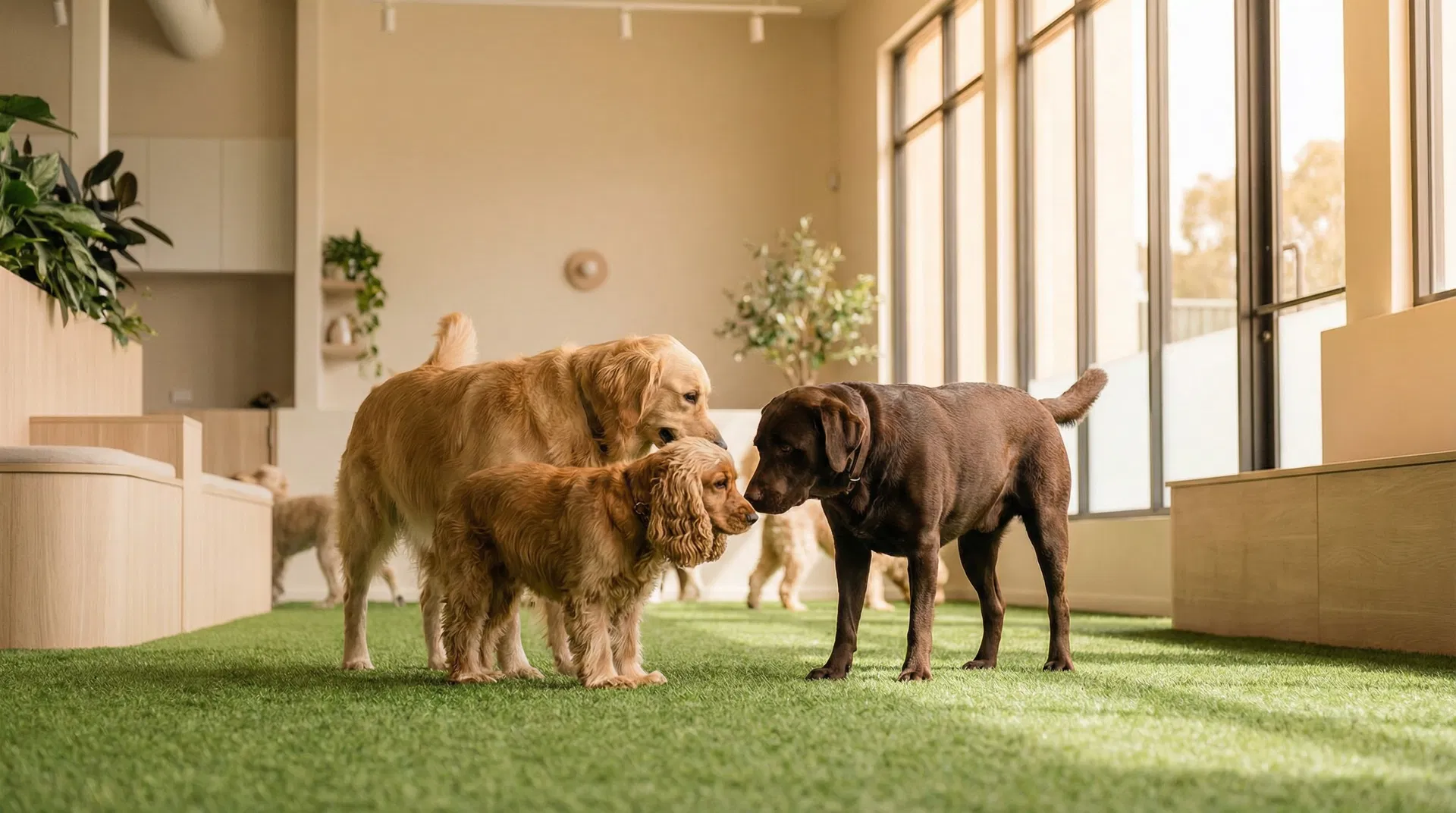
We introduce your dog to one or two calm, settled dogs first rather than the full group. This keeps arousal levels low and gives your dog a chance to make a positive first connection.
Gradual group integration
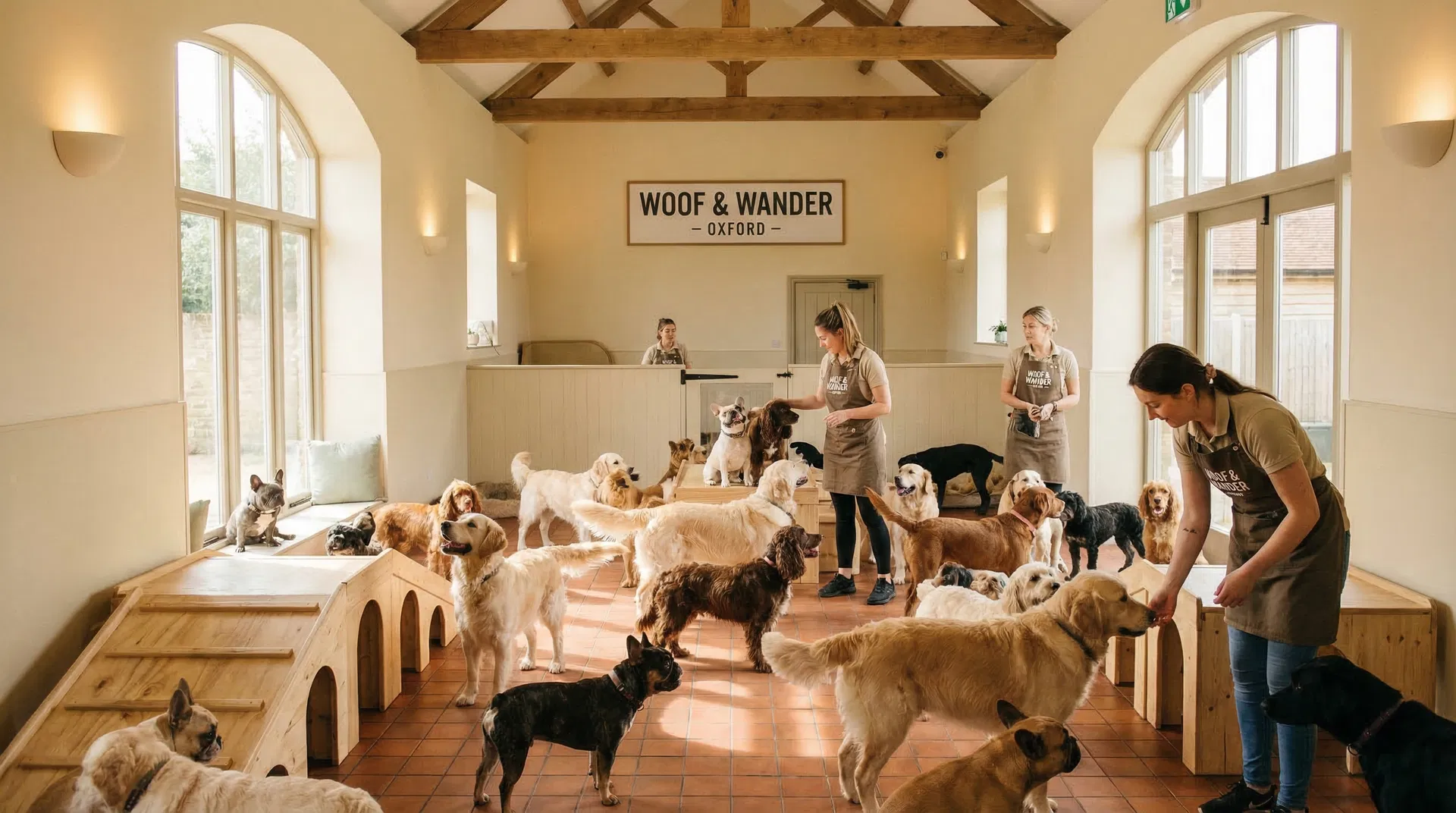
Once your dog is settled and the initial introductions have gone well, we bring them into the wider group. We monitor closely during this transition.
Structured activity and rest
The day is not continuous free play. We build in rest periods, calm activities, and structured time. This is especially important on a first day when everything is new.
04What We Watch For
Throughout the first day, we are observing your dog continuously. Not just whether they are playing and having fun, but the subtler signals that tell us how they are really feeling.
Positive signs
Loose, relaxed body language
Sniffing and exploring freely
Engaging with other dogs calmly
Settling during rest periods
Eating treats or showing interest in food
Signs we monitor
Persistent panting or pacing
Inability to settle during rest
Excessive attention-seeking
Mounting or over-arousal
Avoidance of other dogs
Signs we act on
Growling, snapping, or stiffening
Prolonged freeze or shutdown
Repeated attempts to escape
Sustained high-pitched barking
Escalating arousal that cannot be interrupted
We are trained to read canine body language in real time. If a dog is showing signs of stress, we do not wait to see if they get used to it. We intervene, give them space, and adjust the plan.
05If It Is Not Working
Not every dog is ready for group daycare on their first visit, and that is not a failure. It is information.
If we feel your dog is not settling, is showing signs of sustained stress, or is affecting the group negatively, we will tell you honestly at pick-up. We will explain what we observed and what we think the right next step is. That might be a second visit with a different introduction approach. It might be a recommendation to work on a specific behaviour first. It might be that group daycare is not the right environment for your dog at this stage.
"We would rather give you an honest answer on day one than let a dog struggle for weeks in the wrong environment."
This is not a rejection. It is professional guidance. A dog that is not ready for group daycare today can often get there with the right support, and we will point you in the right direction.
06Pick-Up and Feedback
At pick-up, we give you a verbal update on how the day went. For a first day, this is more detailed than usual.
What we observed
How your dog settled, how they interacted with other dogs, any moments that stood out (positive or otherwise), and how they were during rest periods.
What to expect tonight
Most dogs are noticeably tired after their first day. This is completely normal and a good sign. A tired dog is a dog that was engaged and stimulated.
What to expect next time
If there are things to work on, we will tell you. If the day went well, we will confirm the next steps for building a regular routine.
Any questions
First days generate questions. We are always happy to talk through what you noticed at home that evening, or anything you want to understand better.